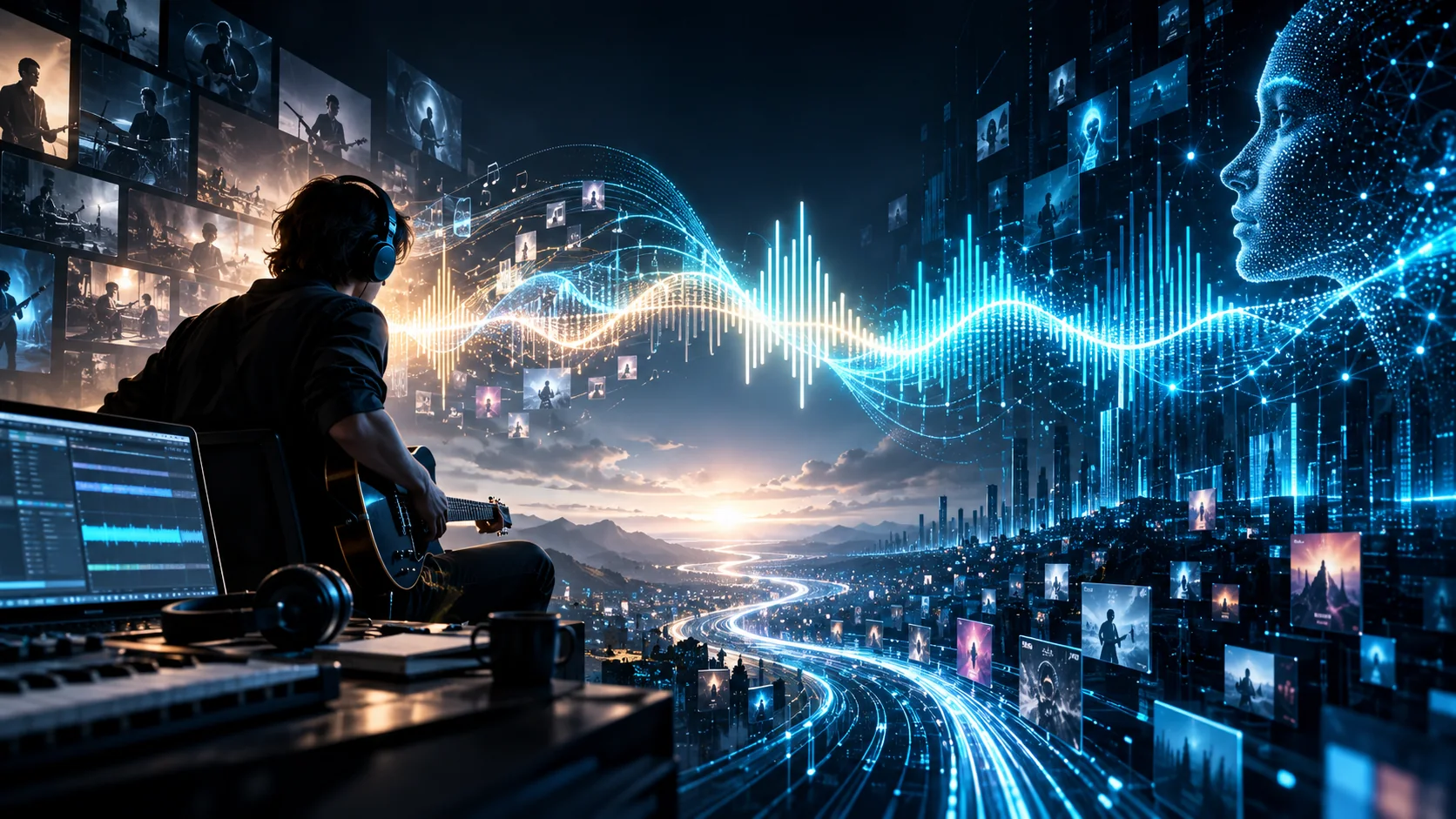
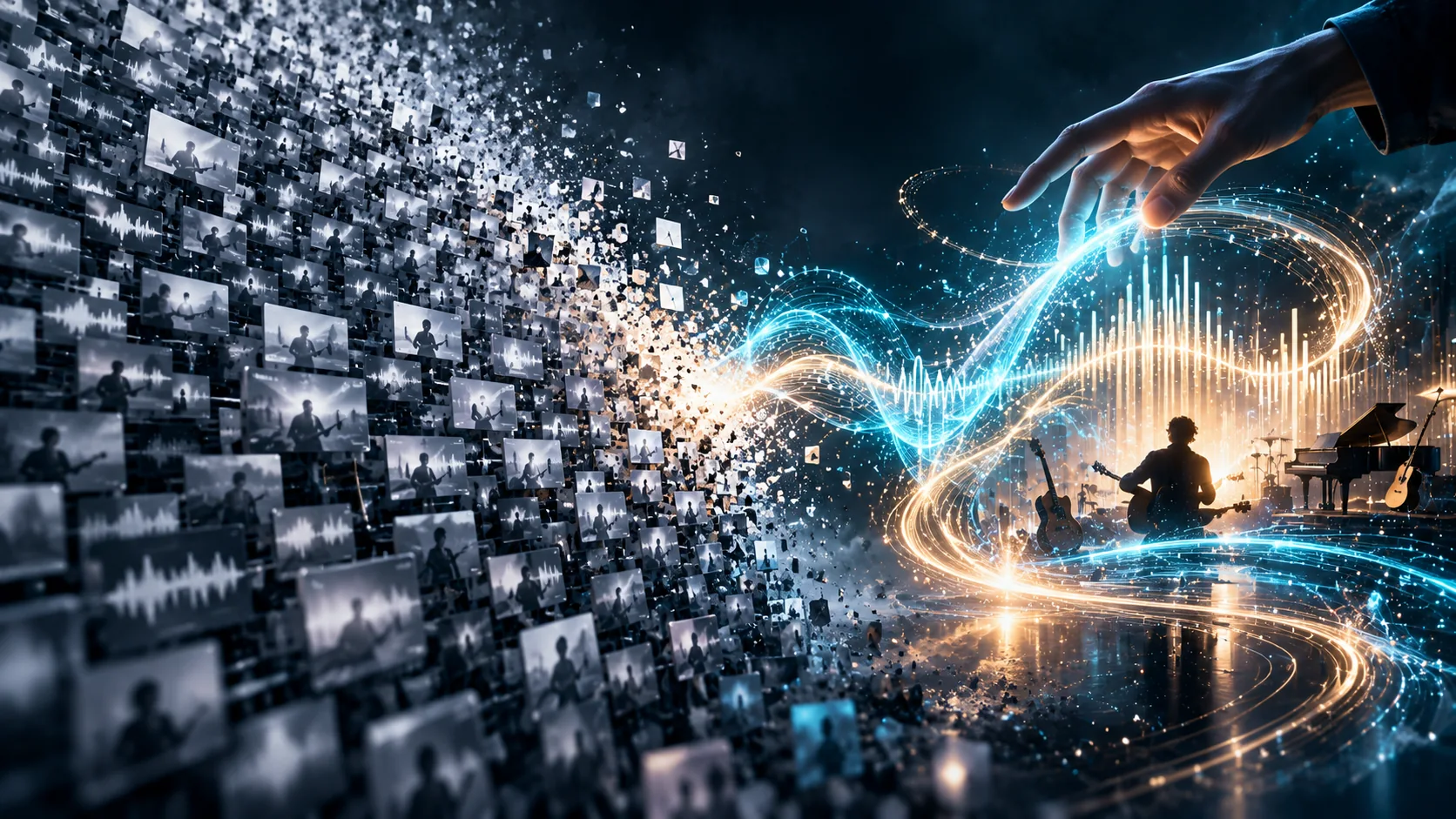
Artificial intelligence has made it possible to produce music, images, videos and written content at a speed that would have seemed extraordinary only a few years ago. A musical idea can become a recording in minutes. An image can emerge from a sentence. A creator working alone can explore possibilities that once required an entire production team.
Yet the same tools have accelerated a less inspiring phenomenon: an endless stream of disposable digital content. The expression “AI slop” has become shorthand for that frustration. It is tempting to draw a simple line between human-made art and machine-made output. But that distinction tells us surprisingly little about the care, imagination or purpose behind a particular work.
A more useful question is not Was AI involved? It is What did the creator actually contribute?
What People Mean by “AI Slop”
In December 2025, Merriam-Webster named “slop” its Word of the Year, defining its contemporary digital sense as low-quality content generally produced in quantity using AI. The term captures a recognizable online experience: repetitive images, interchangeable videos, formulaic text and material optimized for constant publication rather than meaningful engagement.
But “AI slop” is a cultural judgment, not a standardized technical category. It cannot reliably be detected by looking for an AI watermark, counting prompts or measuring how long something took to make. Nor is every work made with generative AI automatically slop.
Low-effort, derivative content existed long before generative models. AI has changed the economics and scale of its production. When making the next item becomes almost effortless, the incentive to stop, evaluate and improve it can weaken.
That is the problem worth discussing: not the existence of powerful creative tools, but what happens when quantity becomes the primary goal.
Co-Creation Is a Process, Not a Software Label
Co-creation describes a collaborative creative process. In AI-assisted work, a person may use generative systems to explore musical directions, develop arrangements, test variations or create source material. The human role can include writing, performing, selecting, rejecting, editing, combining, interpreting and deciding when a work is finished.
Some projects involve extensive recording and production after generation. Others depend on thoughtful prompting, iterative refinement and careful curation. There is no universal number of manual edits that transforms an output into art.
What matters to this editorial distinction is whether a creator is making purposeful decisions in service of an idea—and is prepared to take responsibility for the result.
A producer might discard dozens of generated variations because none expresses the intended emotion. Another might discover a compelling musical moment in an unexpected output and build a composition around it. In both cases, the technology contributes possibilities; the creator supplies direction and judgment.
That does not mean every result will be original or successful. Human intention is a starting point for meaningful creativity, not a guarantee of artistic quality.
Why the Music Industry Cannot Ignore Scale
The tension becomes particularly visible in streaming. In July 2026, Deezer reported that fully AI-generated recordings had exceeded half of its new daily music deliveries on peak days in June, with an average of roughly 90,000 such uploads per day that month. These are Deezer's own detection-based figures, not a measurement of the entire global music market.
The company also reported that fully AI-generated tracks represented only around 1–3% of listening on its service and described substantial fraudulent streaming activity within that segment. Its findings should not be read as evidence that every AI-generated track—or every artist using AI—is fraudulent.
The scale nonetheless creates a real discovery challenge. When catalogs expand faster than listeners' attention, meaningful work can become harder to find, regardless of how it was produced.
Other platforms have addressed mass production in different contexts. YouTube's monetization guidance, clarified in July 2025, identifies repetitive or mass-produced “inauthentic content” as ineligible for monetization. Its examples include generic AI-generated material that appears templated and lacks original insight. The policy concerns YouTube monetization, not a universal rule for music streaming, but it illustrates an important principle: platforms are increasingly examining the value and distinctiveness of content, not simply the tools used to make it.
Can a Fully AI-Generated Song Still Be Art?
Yes, it can be experienced as art. A listener may be moved by a melody, atmosphere or lyric regardless of the technical process behind the recording. An artist may also exercise meaningful creative judgment through concept development, iteration and selection without recording a conventional instrument.
However, artistic value, legal authorship and platform eligibility are separate questions. Copyright protection depends on applicable law and the nature of human creative contribution. A moving listening experience does not automatically establish ownership rights, just as a technically complex production does not guarantee an audience.
The reverse is equally important: adding a guitar track, changing a mix or spending hours in a digital audio workstation does not automatically make a weak idea compelling. Effort is not a reliable measure of artistic worth.
The strongest distinction between co-creation and slop is therefore ethical and editorial rather than purely technical. It concerns intention, judgment, originality, accountability and the experience offered to an audience.
Five Questions That Matter More Than the Tool
Creators and listeners can approach the debate with a more useful set of questions:
Is there a recognizable creative purpose? Does the work express an idea, feeling or perspective beyond filling a publishing slot?
Were meaningful choices made? Was the material selected, shaped or challenged, rather than accepted automatically?
Does the result offer something distinctive? It need not reinvent music, but it should have a reason to exist beyond multiplying similar outputs.
Is the presentation honest? Claims about performers, collaborators, voices and creative methods should not deliberately mislead audiences.
Is the creator accountable? Can the person or organization behind the work address rights, attribution, mistakes and legitimate criticism?
These are not a certification checklist. A work may succeed on some dimensions and fail on others. Their value lies in shifting the discussion away from blanket judgments about AI users and toward the substance of creative practice.
Abundance Is Not the Same as Culture
The ability to generate nearly unlimited content is a remarkable technical achievement. But culture is not built by volume alone. It grows through interpretation, shared experience, experimentation, memory and the choices people make about what deserves attention.
A future dominated by indiscriminate automated publishing risks treating music as inventory and audiences as metrics. A future built around thoughtful co-creation could instead give independent artists more room to experiment, collaborate and communicate ideas that might otherwise remain unrealized.
Both possibilities can emerge from the same technology.
At COCREON, our editorial perspective is that creative tools should expand human imagination, not replace the need for it. That position does not require rejecting fully generated work or idealizing traditional production. It requires taking creative intention—and responsibility—seriously.
AI slop is not defined simply by the presence of artificial intelligence. The deeper concern is the absence of meaningful creative intention.
Co-creation, at its best, begins where the easy output ends: with the decision to make something worth sharing.
Sources and Further Reading
- Merriam-Webster — “Slop” named 2025 Word of the Year (December 15, 2025)
- Deezer — AI music surpasses 50% of new uploads on peak days (July 21, 2026)
- YouTube Help — Channel monetization policies and inauthentic content
Editorial note: This is an analysis and opinion article. Platform figures and policies are attributed to their respective publishers; assessments of creativity and cultural value are editorial judgments. Information reviewed October 22, 2026.